Passia
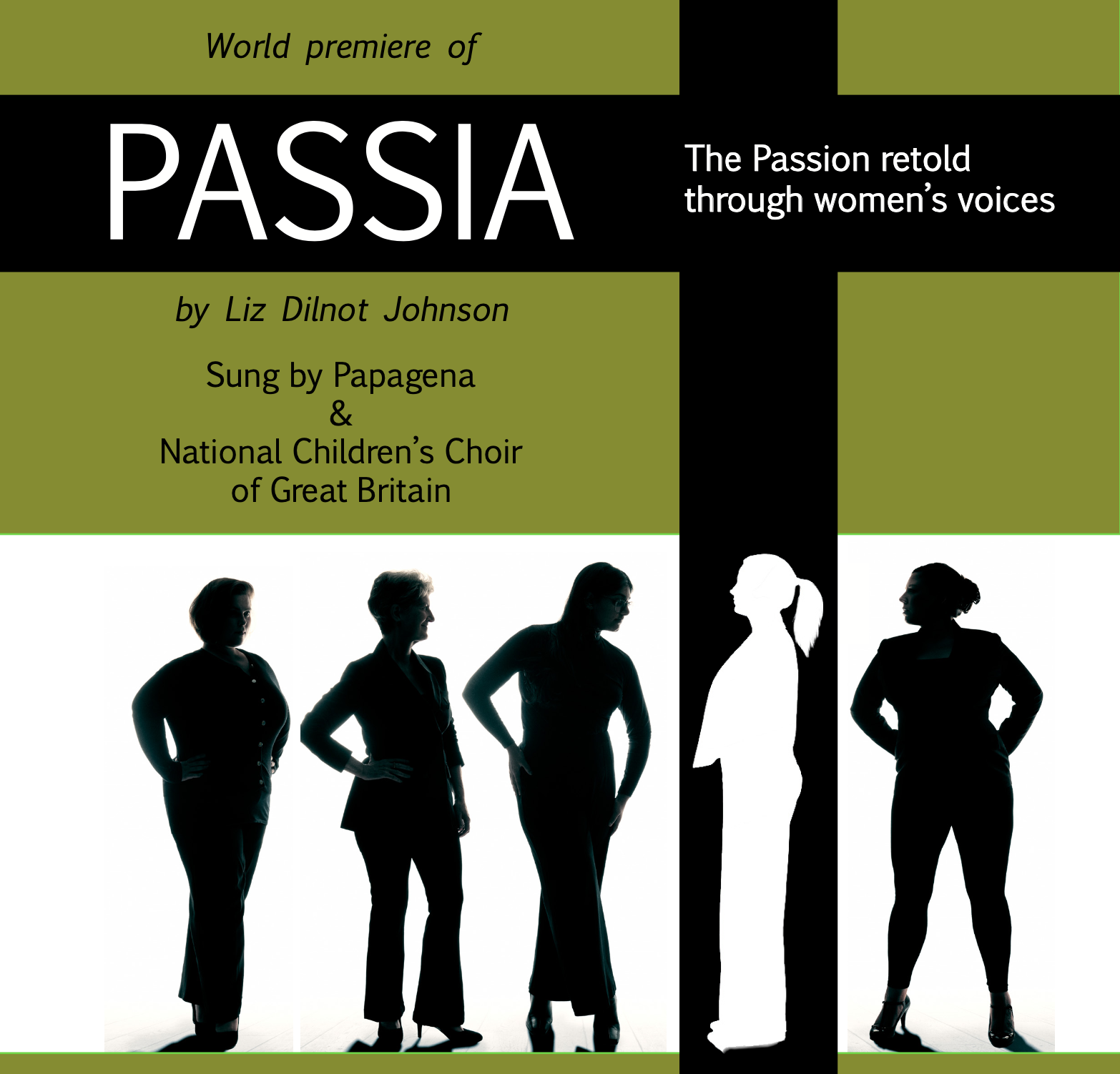
Passia is a large-scale cantata telling the Passion story through the eyes of five of the women at the foot of the cross, commissioned by Papagena.
As with many projects I have taken on, the idea was magnetic! When singer Suzzie Vango first mentioned the concept of Passia to me I immediately knew that this was an extraordinary opportunity for me to create something significant for the repertoire. I knew could create something unique for the five amazing singers in the group.
The newly created libretto by Sarah Meyrick dives into each character, and we are drawn into their world as they share memories of their own relationship with the man who is condemned to death. One of the women is unknown to the others - Veronica. She tells her story of being outcast due to her condition suffering twelve years of bleeding, and on touching the hem of Jesus’ robe: ‘One touch healed’.
Passia starts with the women arriving at Calvary, confused at the sudden events leading to Jesus’s death sentence. We wait with them to see what happens, and they are shocked when the man they love is executed in front of them.
The two sisters of Lazarus arrive confident that he will be saved, singing a traditional Palestinian song that promises rescue to the captured one, while the others express a deepening foreboding as time goes on. No one knows what will happen.
To expand Meyrick’s beautiful and haunting words I have sought out a range of complementary texts, both ancient and modern.
Along with Thomas Aquinas’s Pange Lingua and Tantum Ergo that tell the story of Jesus’s life, I wanted to find a Hebrew phrase - something that would be said to a parent whose child has died. I came across the beautiful words: Min haShamayim Tenuhamu. I discussed the meaning of this with British-Ukrainian writer and poet Neta Shlain and asked her to create lyrics in English that help convey the all-encompassing depth and breadth of this phrase. These words are sung by the choir of trebles that feature in Passia alongside the five professional female singers of Papagena.
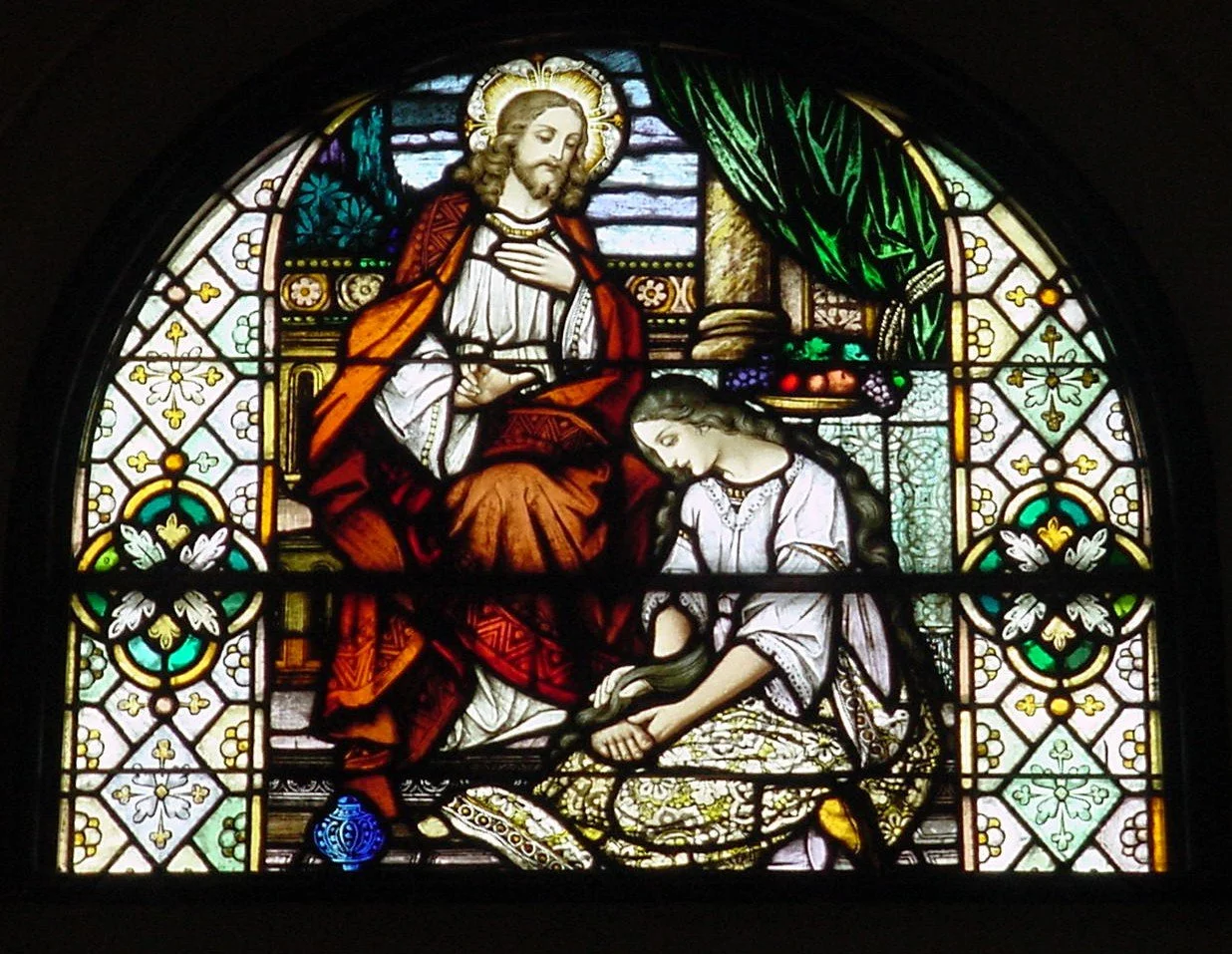
During my research for the project I asked one of my local clergy, Sue Beverly, to help me explore relevant writings by female authors and other ideas. Sue reminded me of the significance of the various occasions when a woman anoints Jesus with oil. I have created new lyrics for Mother Mary, recounting anointing Jesus as a baby with frankincense and myrrh, and Mary Magdalene and Mary the sister of Lazurus who each anoint him with fragrant oil and wash Jesus’s feet with their tears.
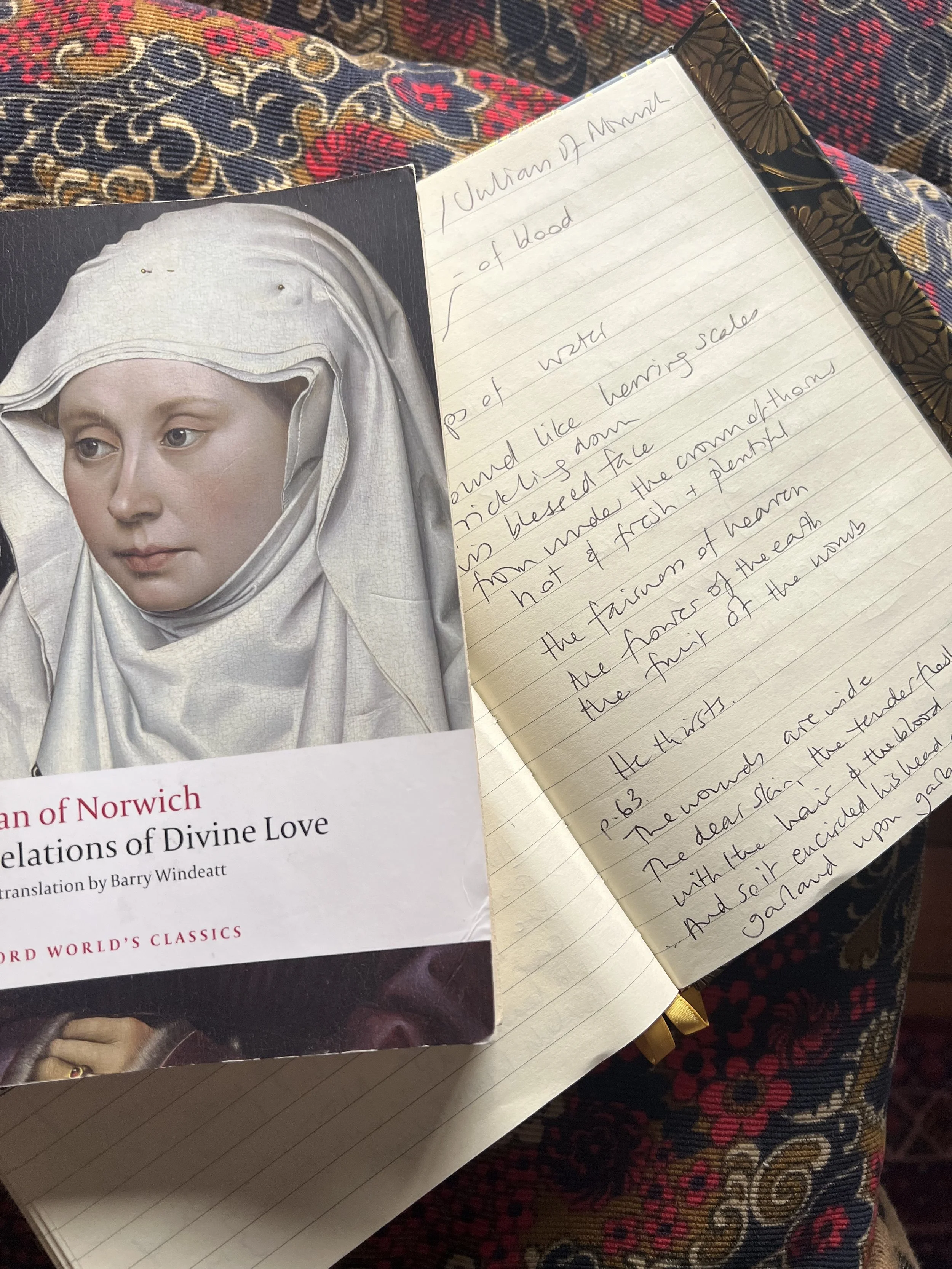
I have also taken inspiration from Julian of Norwich’s vivid vision of the crucifixion where she describes the hot beads of blood flowing down from the crown of thorns ‘round as herring scales’ with music that whirls into a wild dance, witnessing the pain and horror of this cruel death.
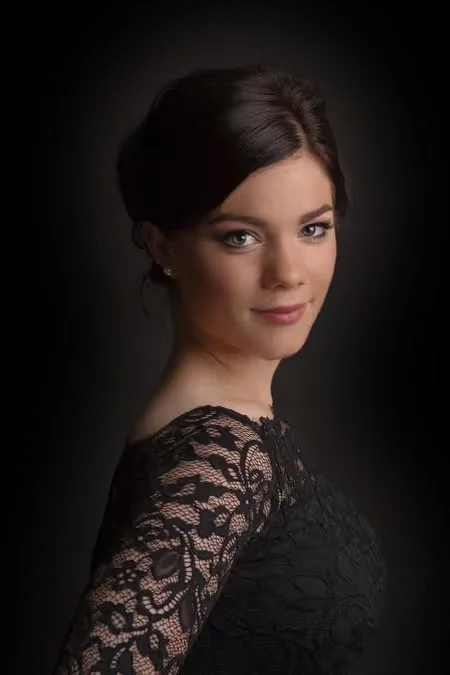
The fifth female author included in this work, Kassia, was suggested by Papagena’s soprano Margaret Lingas. Kassia was a Byzantine Greek Abbess of the 9th century, and she was also a poet and composer. Margaret shared with me an extraordinarily sensuous evocation of Mary Magdalene’s words to Jesus at the time of his death - music that is still sung in the Byzantine Greek Orthodox tradition during Holy Week. I have transcribed the original melody and words which, in Passia, is interwoven with an English translation and a new lyrical countermelody sung as a duet by the two sopranos Margaret Lingas (in Byzantine Greek) and Suzzie Vango (in English).
The final element of Passia is also drawn from Kassia’s words. She includes a sequence of syllables in Byzantine Greek that have no standard meaning as such, but that have been interpreted as ‘words of the angels’. I have used these ‘words’ to create a set of Four Angel Songs for the treble choir. The Angel Songs are full of vivid bright light and the fluttering of angels wings, in strong contrast to the dark intensity and searing beauty of the music for the vocal quintet.
We are now at that point when we are asking those of you with deep pockets to contribute, whatever you may be able to, to this ground-breaking new work. However small or big your donation it will all help! You can donate here https://www.papagena.co.uk/support-us
There are a wide range of costs involved in developing the work for the final performance tour. We started workshopping my initial sketches in 2024, then during 2025 developing and refining material that fits each voice perfectly.
The recently completed work lasts 45 minutes in total, taking the audience on a journey of deepest love, shock and grief, where the end of the story is not yet known, ending with Jesus’s body in the arms of his grieving mother.
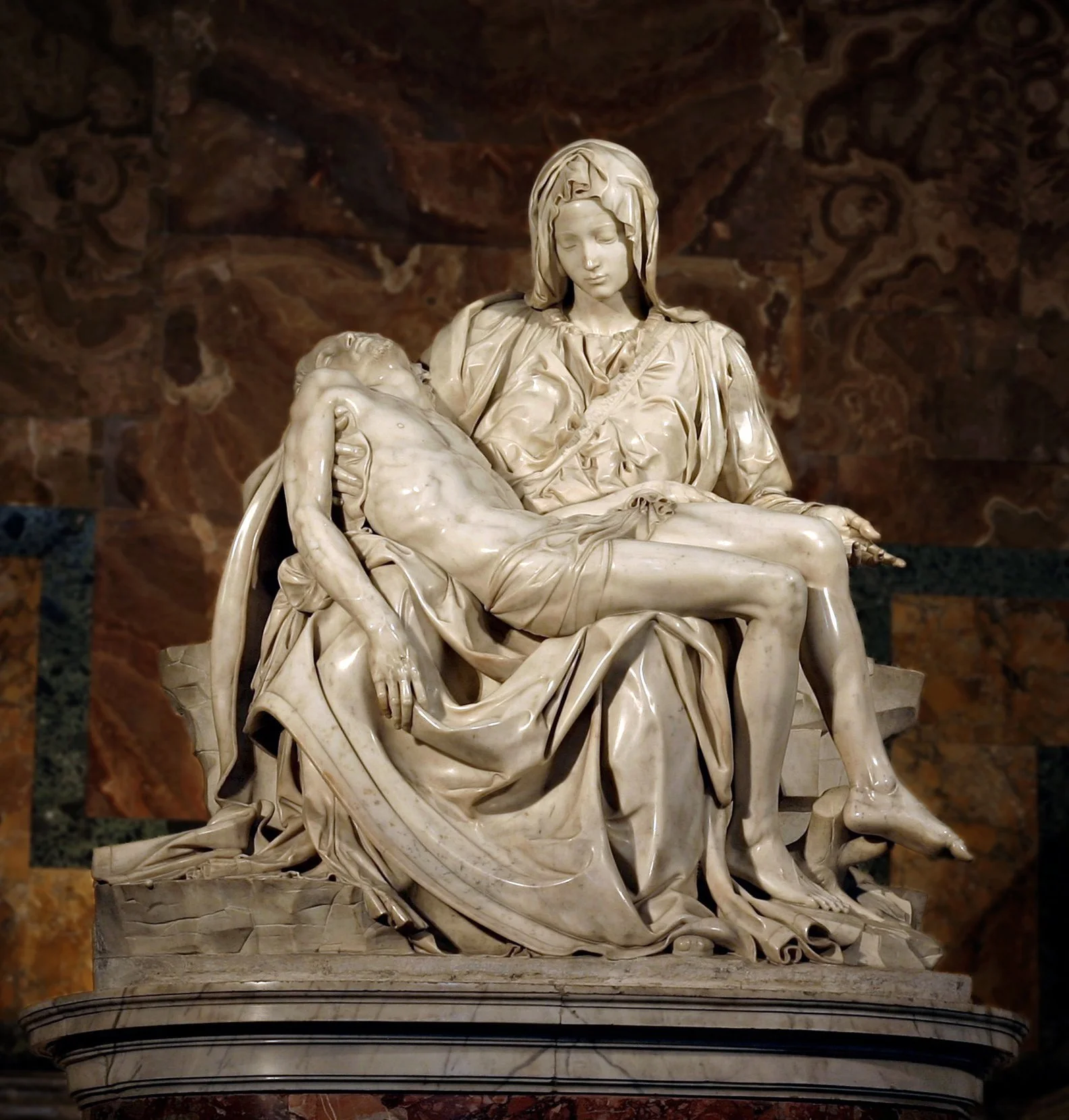
I am thrilled that the National Children’s Choir of Great Britain are singing the premiere performance of Passia with Papagena on March 30th, 3pm 2026.
Tickets are available here
As you can imagine this project has been an extraordinary journey of discovery for me as a composer and poet. I am very grateful for all the guidance and support I’ve received from Sarah Meyrick and Neta Shlain, from each of the singers in Papagena, and from wise friends and colleagues who have helped me form and shape these ideas into a unique telling of this story that brings the voices of these diverse women to life.
Here’s the link to support the Passia project, thank you!